Behavioral Health Non-Profit
Research for a sober alumni program.
Confidential
Role
UX Researcher
Client
(Confidential) Behavioral Health Non-Profit
Deliverables
Mixed-methods research findings, shareable insight graphics, and strategic recommendations presented to organizational leadership.
Problem Statement
The organization's sober alumni program had limited participation and little visibility into what was actually working. Without a clear picture of alumni experiences and needs, leadership had no reliable basis for prioritizing investment or improving the program's impact.
Leadership needed research that was both rigorous and actionable — grounded in the lived experiences of program participants.
Overview
Designed and executed a mixed-methods research study focused on sober alumni program participants.
Applied trauma-informed research practices throughout to ensure participant safety and comfort.
Identified key moments in the alumni journey where the program had the greatest — and least — impact.
Goals
Understand the experiences and needs of sober alumni to inform strategic decisions for program improvement.
Translate qualitative interview data into structured, comparable findings.
Present research findings clearly for stakeholder review.
Approach
1. Identify the information needed for strategic decision-making and craft interview questions to elicit candid, subjective responses.
2. Design a categorized scoring system to translate qualitative responses into comparable data points.
3. Record interviews and prepare transcripts for structured analysis.
4. Cluster responses and identify recurring themes.
5. Visualize findings as a program maturity assessment.
Research
Conducted in-depth interviews with a diverse cross-section of program alumni to understand their experiences and ongoing needs.
Administered supplementary surveys to validate qualitative findings at scale.
Analyzed data for recurring themes, emotional-arc patterns, and unmet needs across participant segments.
Research Framework — What We Needed to Know
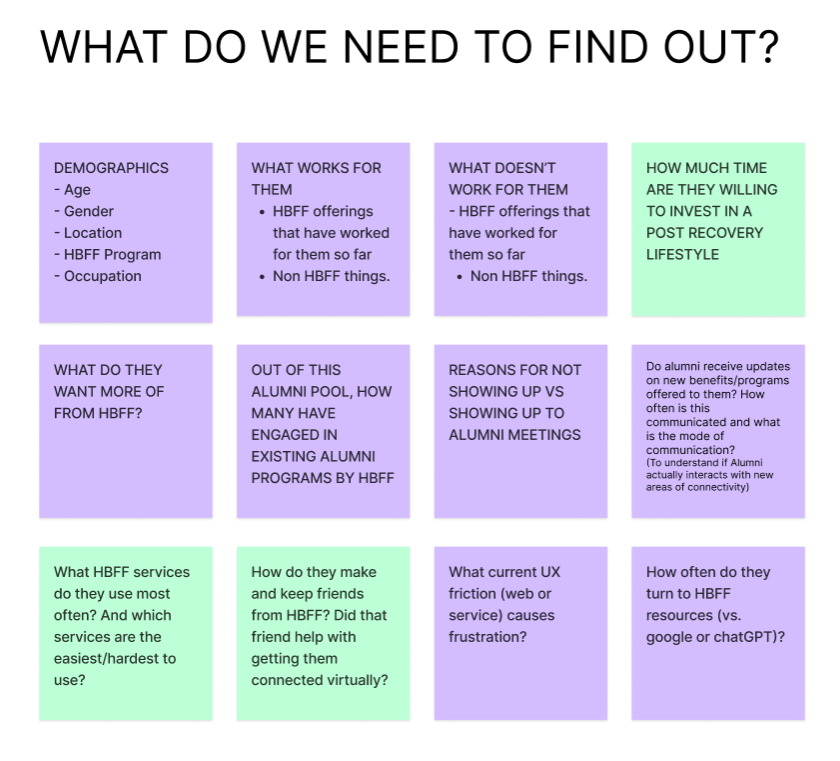
Interview questions were organized by theme, with open-ended framing designed to encourage candid, story-driven responses.
Interview Question Bank, Organized by Theme
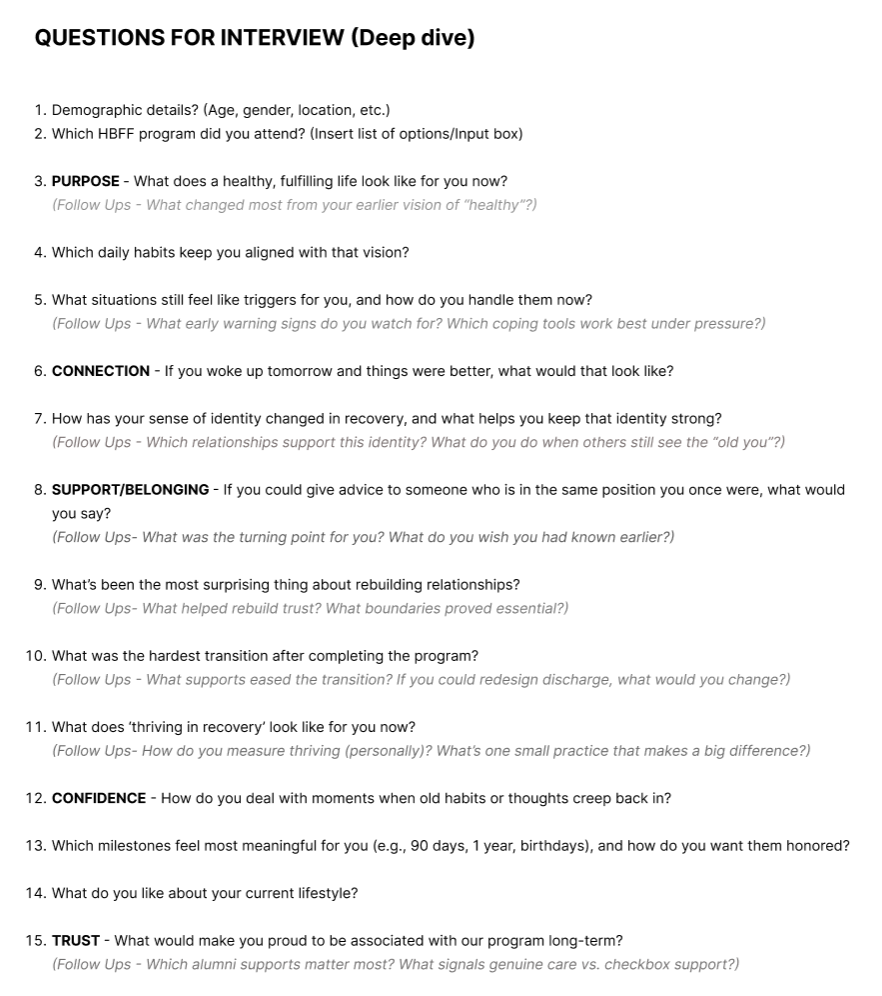
Participant responses were mapped to these established themes and scored on a 1–5 scale based on contextual detail.
Synthesis
Synthesized and visualized research findings to surface clear themes and support strategic decision-making.
Consolidated findings into shareable graphics designed for non-research audiences.
Mapped insights to program touchpoints to identify specific opportunities for improvement.
Thematic Clustering — How Data Was Grouped
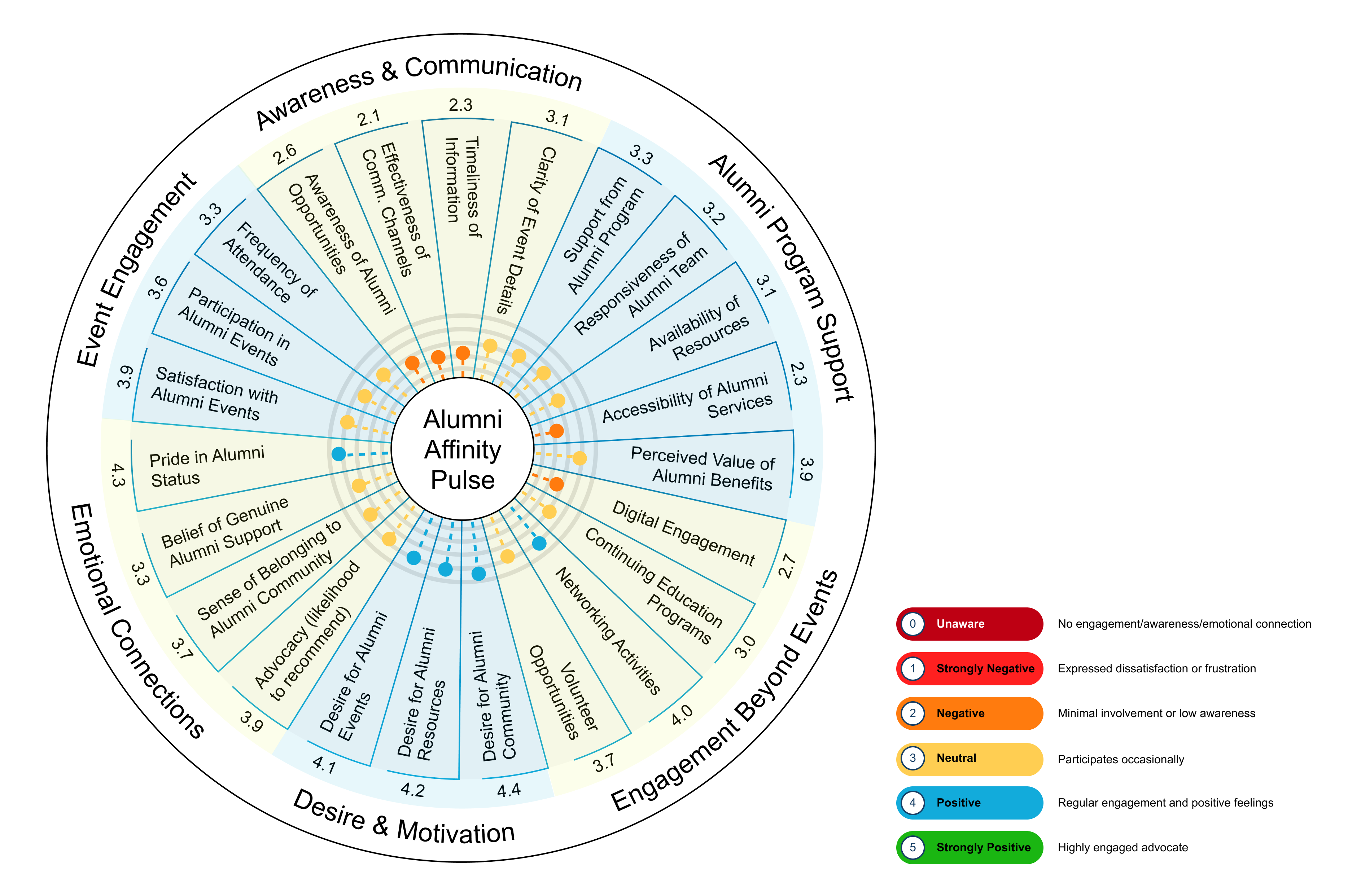
Outcome
Presented findings and strategic recommendations to organizational leadership and key stakeholders.
Research directly informed the program's roadmap priorities and shaped plans for a future digital support tool.