Educational Gameplay Thesis
Reframing the Value of Plastics through Educational Game Design
M.S. Thesis — University of Houston, 2020
Role
Researcher & Designer
Graduate Thesis
Methods
IAT, Embedded Experiment, Statistical Analysis (ANOVA, Pearson's r)
Deliverables
Playable Unity prototype, gamified educational framework, scalable modular game design for adaptation by retailers, municipalities, or brands managing plastic.
Problem Statement
Plastic recycling infrastructure is fundamentally insufficient to combat production volumes. Consumers who attempt to recycle items that cannot be recycled — a behavior known as aspirational recycling, or "wish-cycling" — contaminate a resource that would otherwise be recoverable.
In Houston where this study was based, a maximum 6% of plastic placed in recycling bins is actually reclaimed — the rest goes to landfill. Yet the single-stream system and the ubiquitous chasing-arrows logo continue to signal that "all plastic can be recycled."
No immediate feedback mechanism exists to correct an aspirational recycler's habits. This research asked: can a game change that?
Fig. 1 — Consumer Plastic Flow: Decisive Intersections
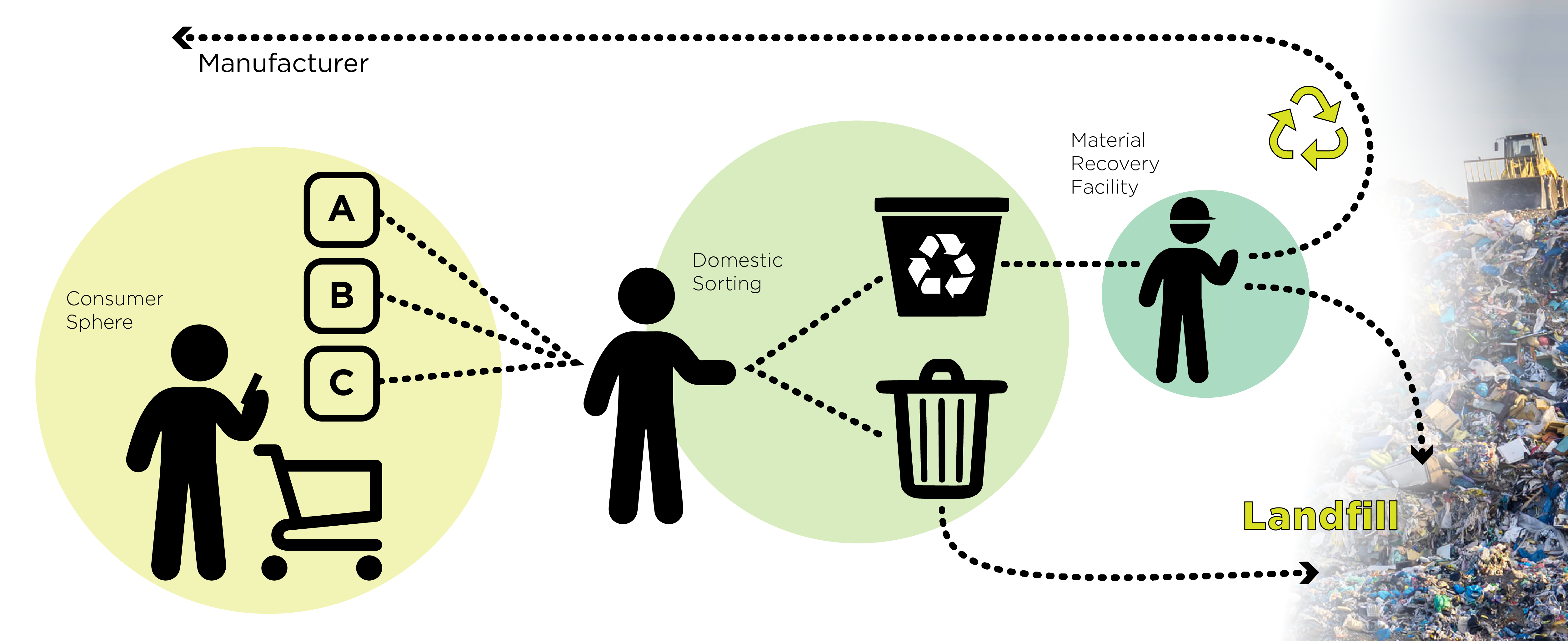
From purchase through domestic sorting to Material Recovery Facility or landfill — every decision point is an opportunity for mis-sorting.
Overview
The research followed a Product-Service System (PSS) model — a three-phase pragmatic approach where a unifying long-term vision (closing the plastic loop) governs each experimental step. The game functioned simultaneously as the design solution and the research instrument.
Two data collection tools were designed and tested with University of Houston participants under IRB approval: a customized Implicit Association Test (SORT:IAT) and a prototyped virtual game (WishCycle). Both used identical entry and exit surveys plus a visual quiz to allow direct comparison of knowledge retention across formats.
The outcome was WishCycle: A Sorted Adventure — a generalized, modular game framework designed to be adapted for any organization managing consumer plastics, with replaceable branded product assets, mascots, and localized recycling rules.
Fig. 2 — PSS Structure

The three-phase structure of the Product-Service System model.
Research
The investigation phase combined wide-ranging literature review, expert interviews with industry stakeholders (Material Recovery Facility operators, recycling entrepreneurs, sustainability researchers), and first-hand observations at Houston grocery stores — the decisive intersection where consumers first purchase plastics.
Grounded research questions guided the study:
1. What makes people recycle now, and why is the rate still insufficient?
2. Why are plastics so readily pollutable despite familiar recycling logos?
3. When is recycling not associated with trash — and can that association be taught?
Applied literature review then focused on gamification mechanics, Implicit Association Test methodology, Product-Service System design, and socio-technical experiments as agents of change.
Wide-ranging investigation through literature review, expert interviews, and grocery store observations. Key finding: infrastructure is built on flawed assumptions; recycling policy confuses rather than guides; single-stream systems license wishful thinking.
A modified Implicit Association Test (SORT:IAT) measured subconscious bias toward plastic recyclability. Findings shaped the final game prototype. Both tools used identical surveys and a visual quiz to compare knowledge retention across formats.
Results confirmed the hypothesis. A scalable, modular game framework was developed — designed for adoption by retailers, municipalities, or brands with replaceable product assets, mascots, and localized recycling rules.
Design Process
The game was named after the problem it intends to solve — a deliberate irony. "Wish" connotes magic wands, stars, and clouds; "cycling" nods to the recycling loop. Combined, they describe the aspirational, wishful actions that pollute recycling streams.
The aesthetic drew from cartoons that entertain children and adults alike — SpongeBob, The Animaniacs, The Simpsons — with double-entendres and tongue-in-cheek humor to reach a wider audience. The game setting takes place inside a Material Recovery Facility, where items appear on a conveyor belt for players to sort in real time.
"The game is named after the problem it intends to solve — a running tongue-in-cheek theme that playfully subverts tropes that typically don't mesh with recycling."
Fig. 3 — Character Design
Character design for the main protagonist: Rice Krispy the Recycle Raccoon.
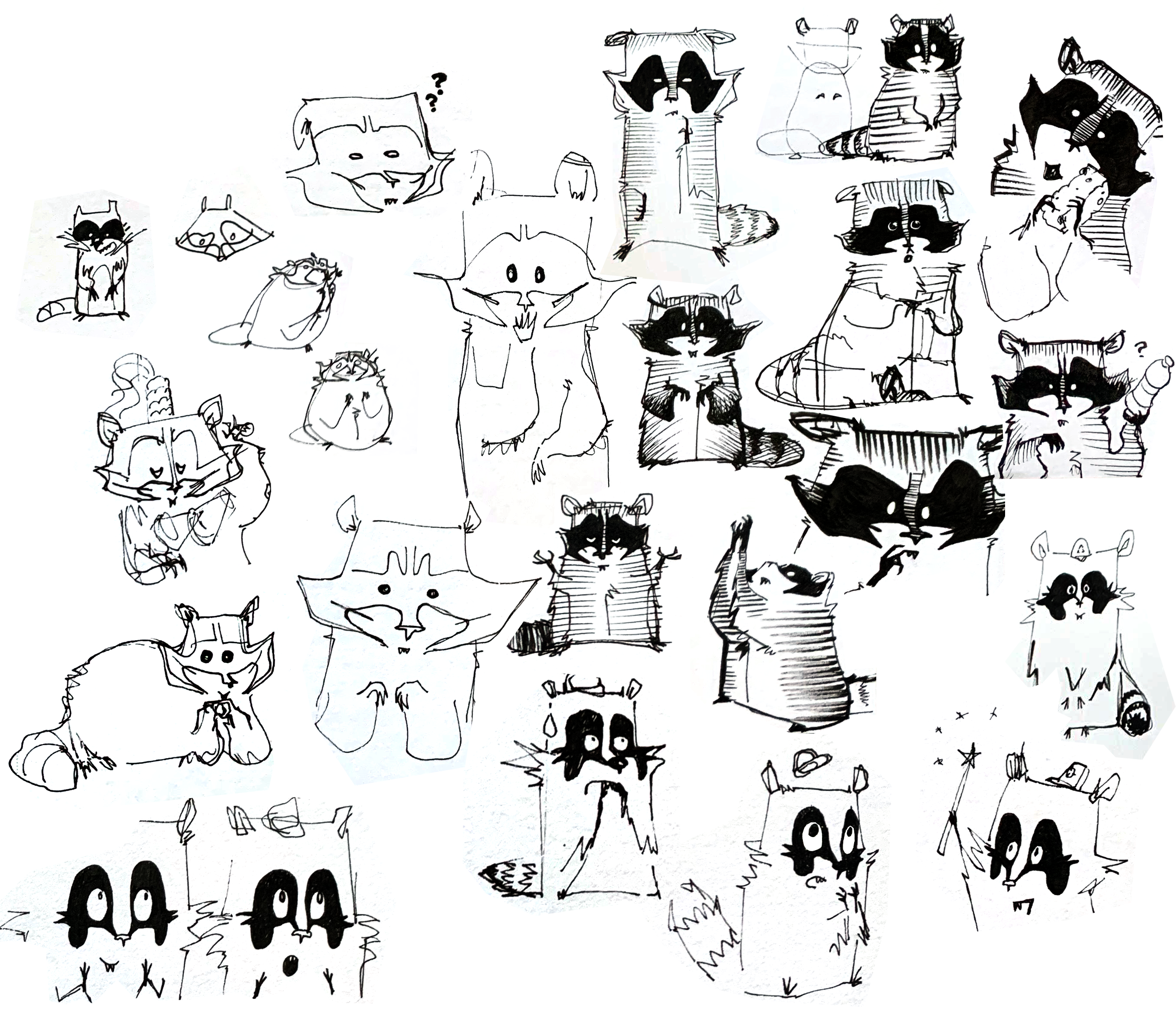
Fig. 4 — Ideation Sketches

Ideation sketches for the game's visual design.
Fig. 5 — WishCycle Logo
Clouds, stars, and a magic wand encode the ironic "wish" — the design solution satirizes the problem.
Fig. 6 — Rice Krispy: Recycle Raccoon
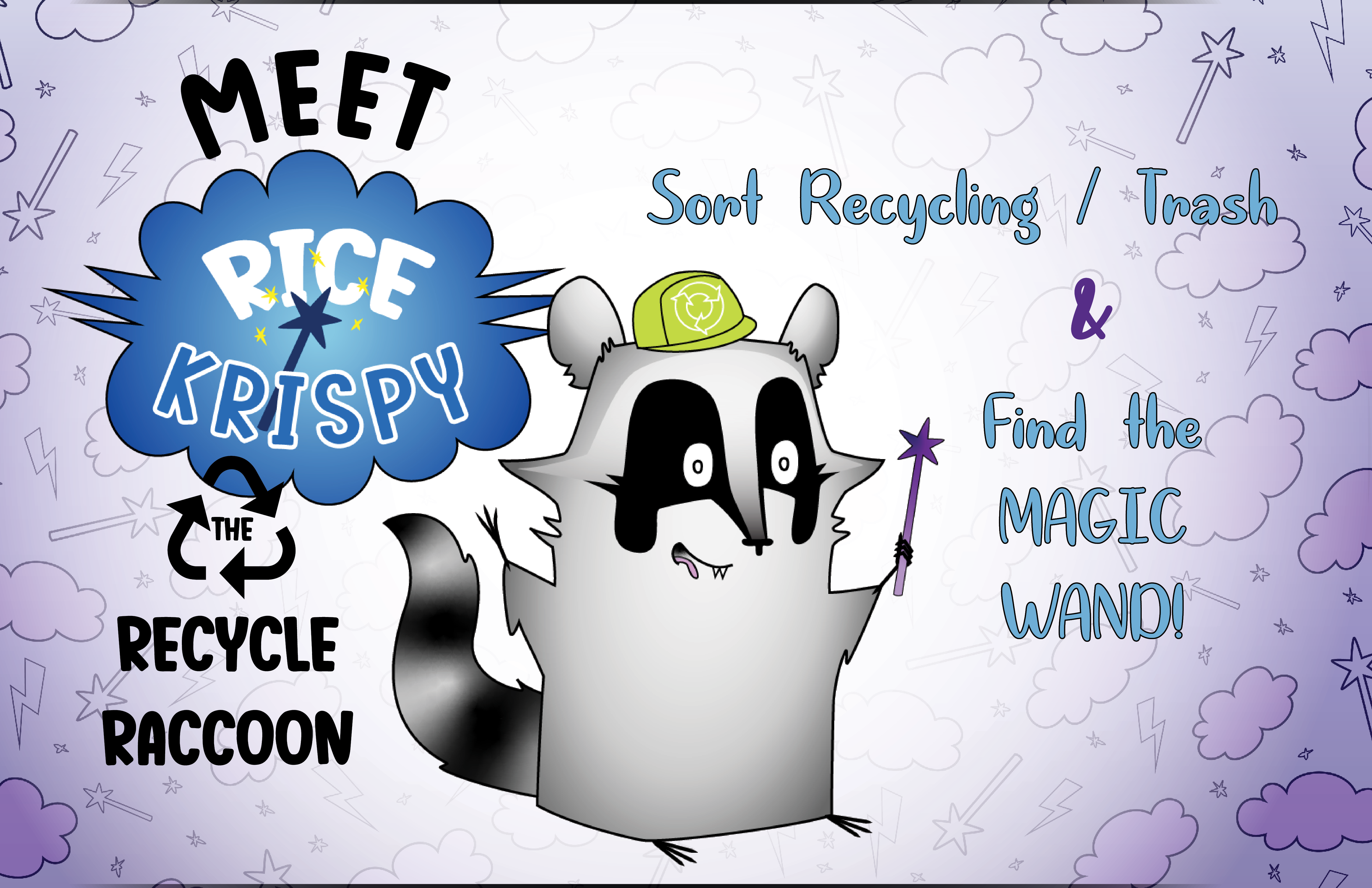
Final avatar design.
Character design decisions were grounded in behavioral research. Rice Krispy the Recycle Raccoon was selected for three primary reasons: raccoons' food-washing behavior mirrors the desired consumer action; their dark eye markings produce naturally expressive emotional reactions that players can empathize with; and the name itself plays on the point bonus mechanism — correct sorting is rewarded with treats
Rice Krispy models the desired real-world behavior — cleaning items before sorting — and visually conveys consequence through expressive reactions, deepening player investment in each choice.
A toxic cloud around the trash can grows with mis-sorted items. Recycling errors deplete the point bank. Every action carries consequence — mirroring real-world costs of contamination.
Each plastic item appears with a clipboard that reveals point value and material type — draggable from the edge, allowing players to investigate before sorting.
Prototype
An initial prototype was built in Unity for the data collection phase, then a more complete wireframe was produced in Adobe XD for presentation. Players sorted virtual plastic items on a conveyor belt toward Trash or Recycle, with immediate point feedback on every selection.
A parallel SORT:IAT — a customized Implicit Association Test — ran the same survey and quiz questions to establish a baseline for comparison. Both tools were administered virtually under IRB approval to University of Houston students, alumni, and staff.
Fig. 7 — Early Unity Prototype
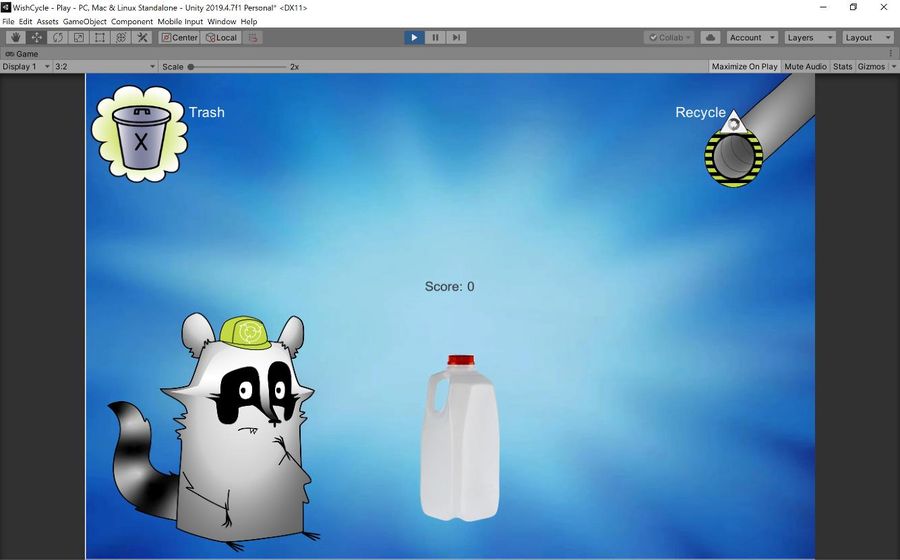
Initial Unity build used for data collection: trash and recycle chute sorting with live score feedback
Fig. 8 — Final Game Environment
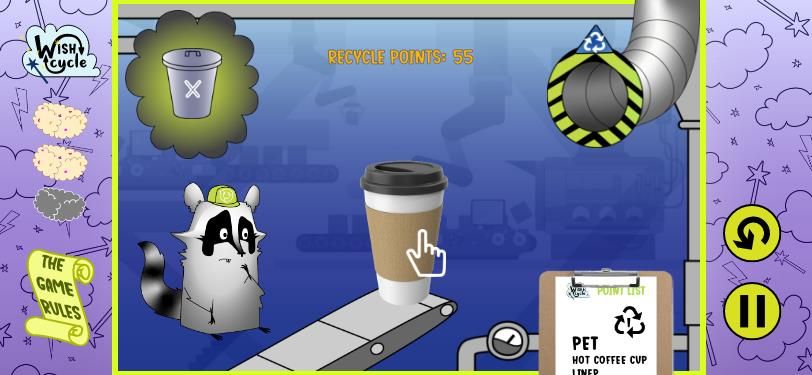
Adobe XD wireframe: full MRF environment with tricky items, clipboard cards, and Rice Krispy integration
Fig. 9 — Correct Selection Feedback
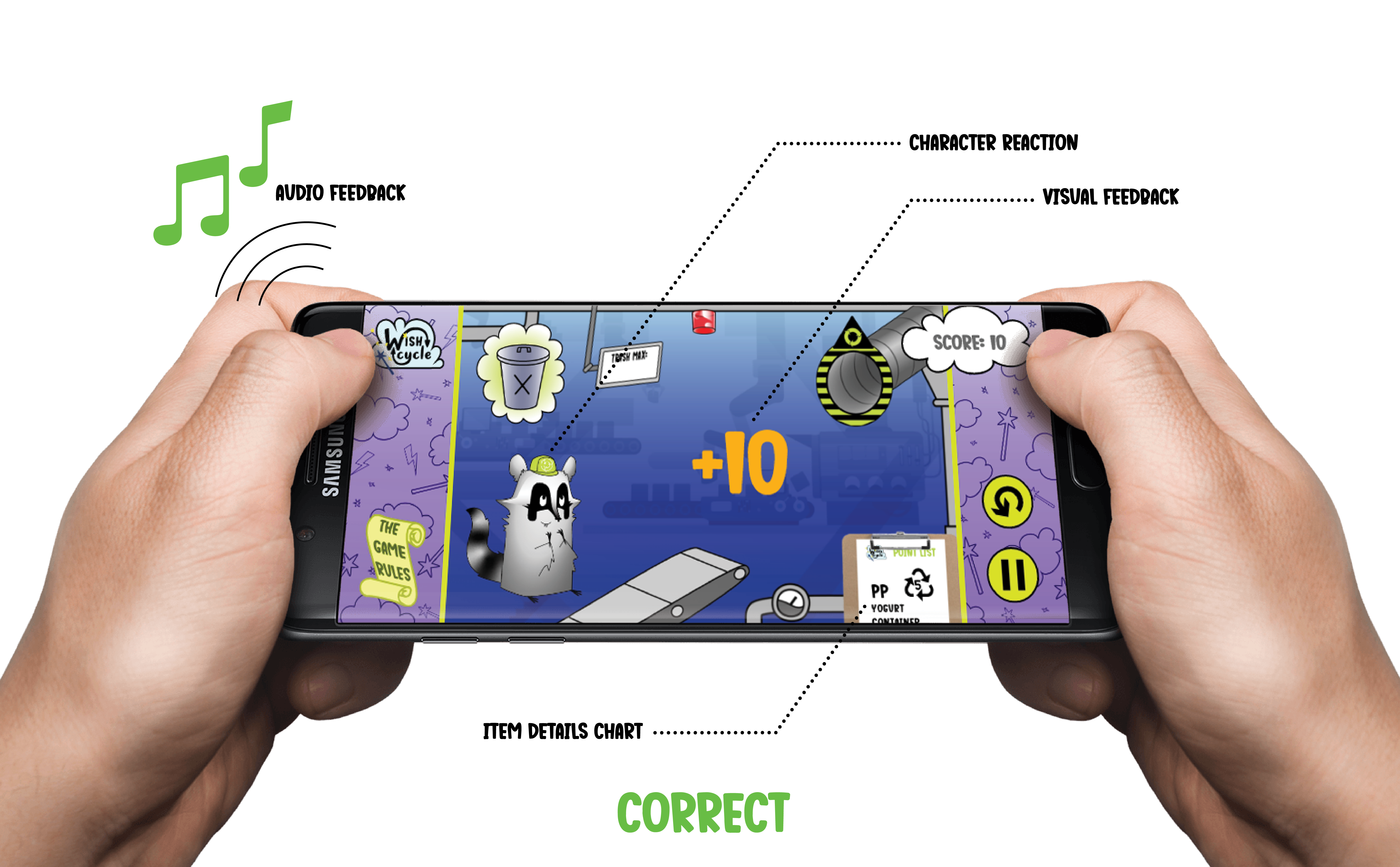
Fig. 10 - Incorrect Selection Feedback
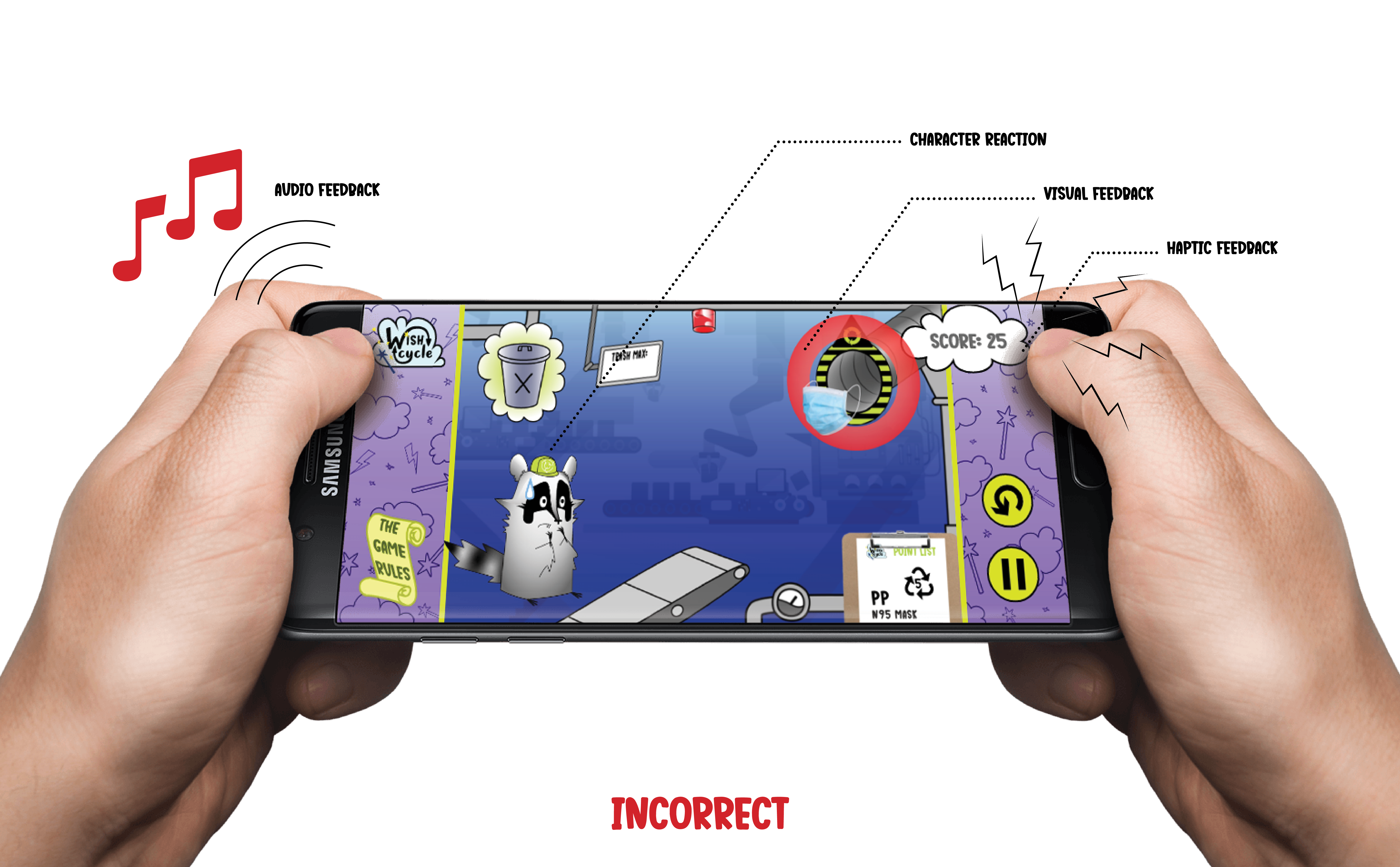
Feedback provided in several forms to reinforce learning
Outcomes
Comparing results from WishCycle against SORT:IAT confirmed the central hypothesis: players who engaged with the gamified environment demonstrated improved ability to associate virtual plastic items with real-world value.
On the exit quiz, a majority of WishCycle players correctly identified which plastic types were more valuable and whether items they had sorted were recyclable — knowledge they did not reliably demonstrate at entry. A statistically significant inverse correlation emerged between players' trust in local recycling infrastructure and their performance: skeptical players evaluated items more carefully and scored higher.
Overwhelmingly positive responses to "Would you play again for more points?" confirmed intrinsic motivation — the core mechanism needed for a scalable public education tool.
"Subjects learned to associate value with virtual plastic items — demonstrated by improved performance on material content questions in the WishCycle Exit Quiz."
Fig. 11 — Exit Quiz

Results from quiz at end of game.
Statistical Summary
Players correctly identified which plastic grades held more value and which items were recyclable under Houston's rules — knowledge not detected at entry for the majority of participants.
The gamified format outperformed the IAT baseline. Immersive feedback loops and character investment drive deeper cognitive encoding of material properties.
The WishCycle framework is designed for adoption by any organization — with swappable product assets, localized recycling rules, branded mascots, and leaderboard infrastructure.
Reflection
WishCycle demonstrated that educational gameplay can meaningfully shift consumer associations with material value — without memorization, lectures, or policy mandates. The experiment simultaneously functioned as a Lab (testing behavior in a controlled environment), a Window (exposing participants to new recycling concepts), and an Agent of Change (influencing attitudes through play).
The design framework extends beyond recycling. Any domain where consumer behavior change is needed — and where knowledge can be encoded through repeated, rewarded interaction and stimuli — is a candidate for this model.